Thai 101
The foundations. Read this once and the recipes make sense.
Thai food is not a list of dishes to memorize. It is a small set of ideas applied over and over. These are the ones that matter.
Flavor balance
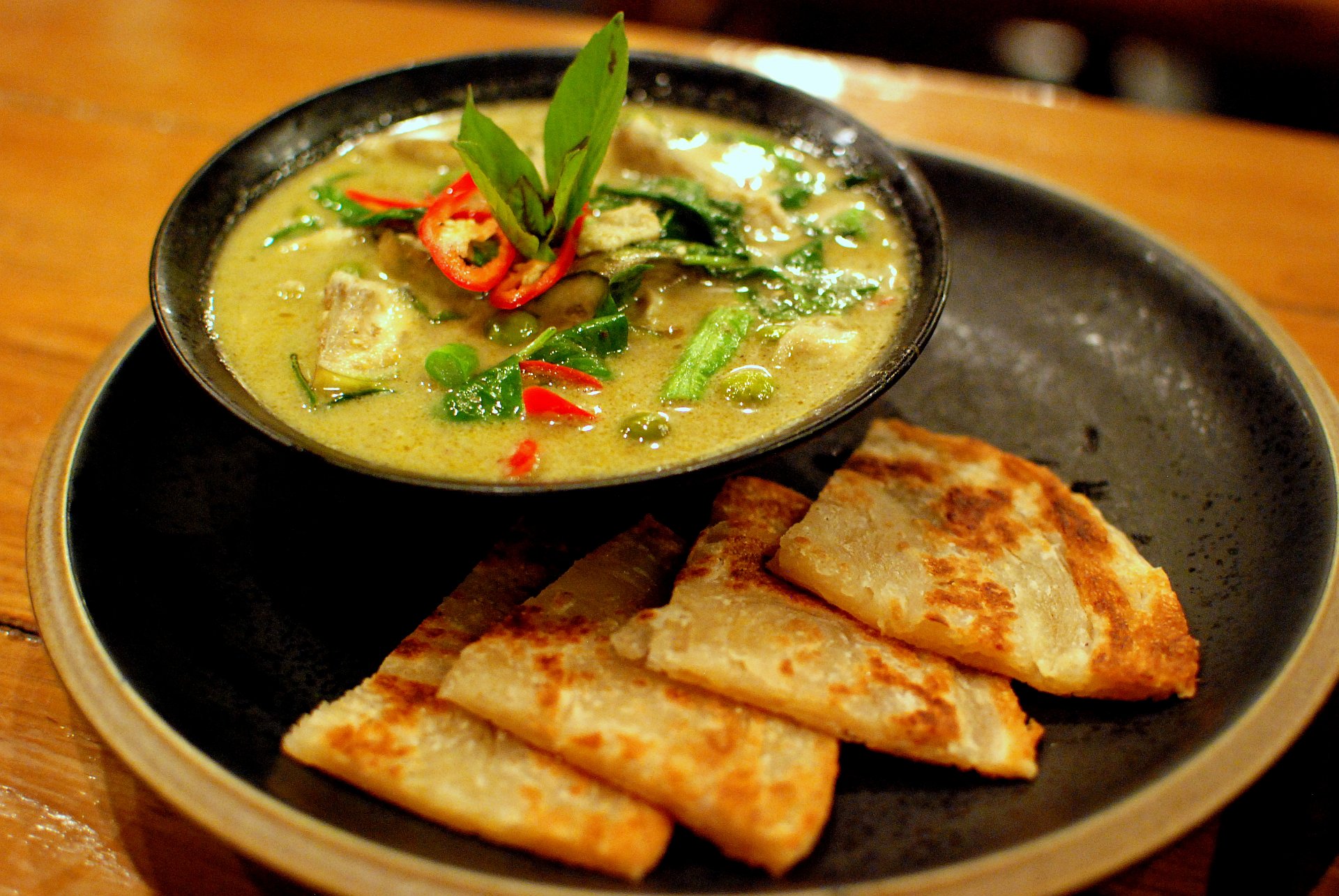
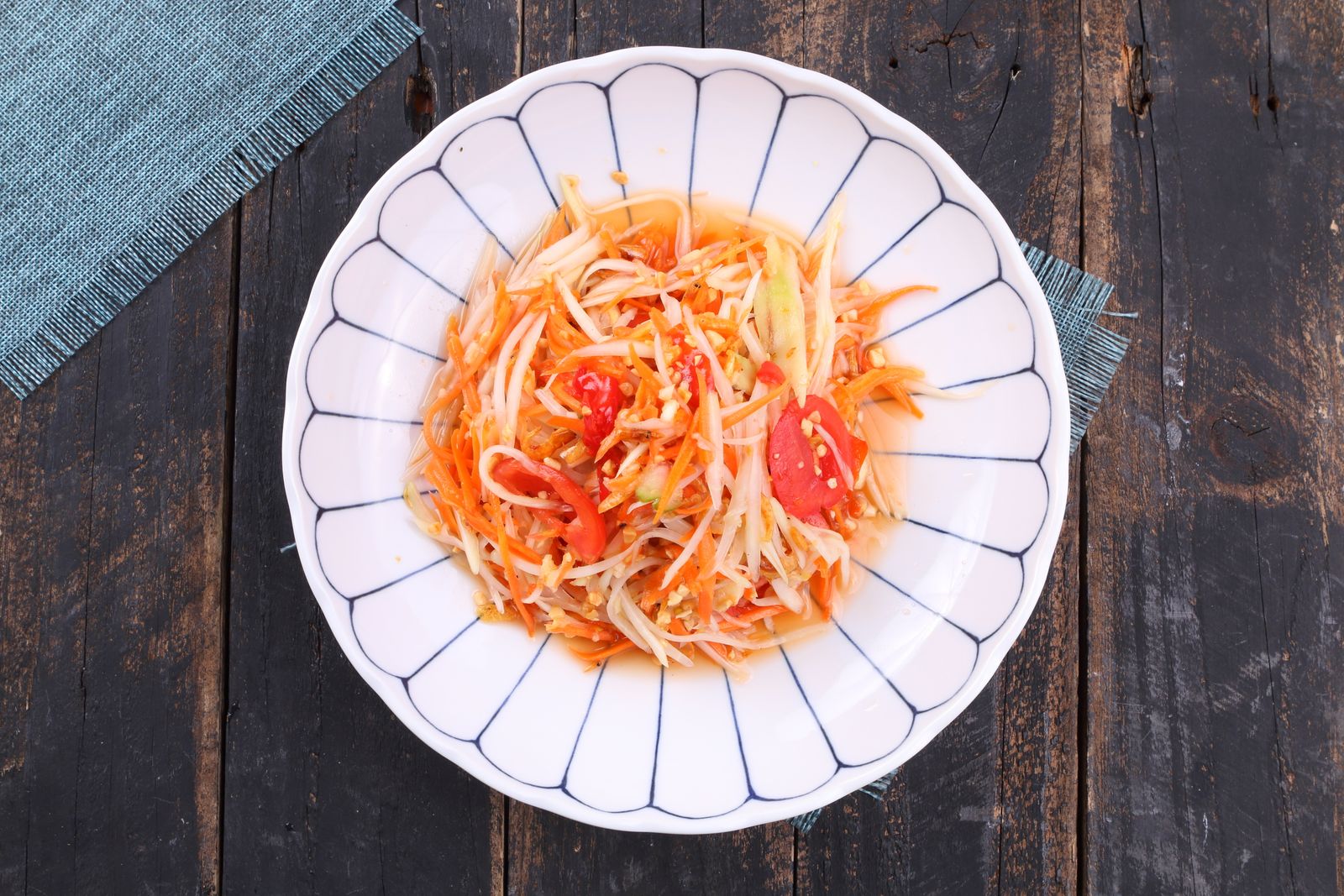
Almost every Thai dish is tuned across four flavors: salty (fish sauce, soy, shrimp paste), sour (lime, tamarind), sweet (palm sugar, coconut) and hot (fresh or dried chili). Dishes are rarely balanced evenly. A som tum leads with sour, a green curry leads with salty and aromatic, a pad thai leans sweet-sour.
The habit that makes the difference is tasting at the end and asking which of the four is missing. Too flat means salt. Too heavy means sour. Too sharp means a pinch of sugar. Thai cooks adjust every single time, which is why recipes say "taste and adjust" and mean it.
| Dish tastes | Add |
|---|---|
| Flat, dull | Fish sauce, a little at a time |
| Heavy, cloying | Lime juice, off the heat |
| Harsh, too sharp | A pinch of palm sugar |
| Thin, one-note | More aromatics: garlic, shallot, lime leaf |
| Boring | Chili, or prik nam pla on the side |
The heat scale used on this site
Heat levels use the words you would use ordering in Thailand. Chili counts in the recipes match the level shown, and every recipe says how to turn it down.
Four techniques that cover most of the archive
Hot wok, small batches
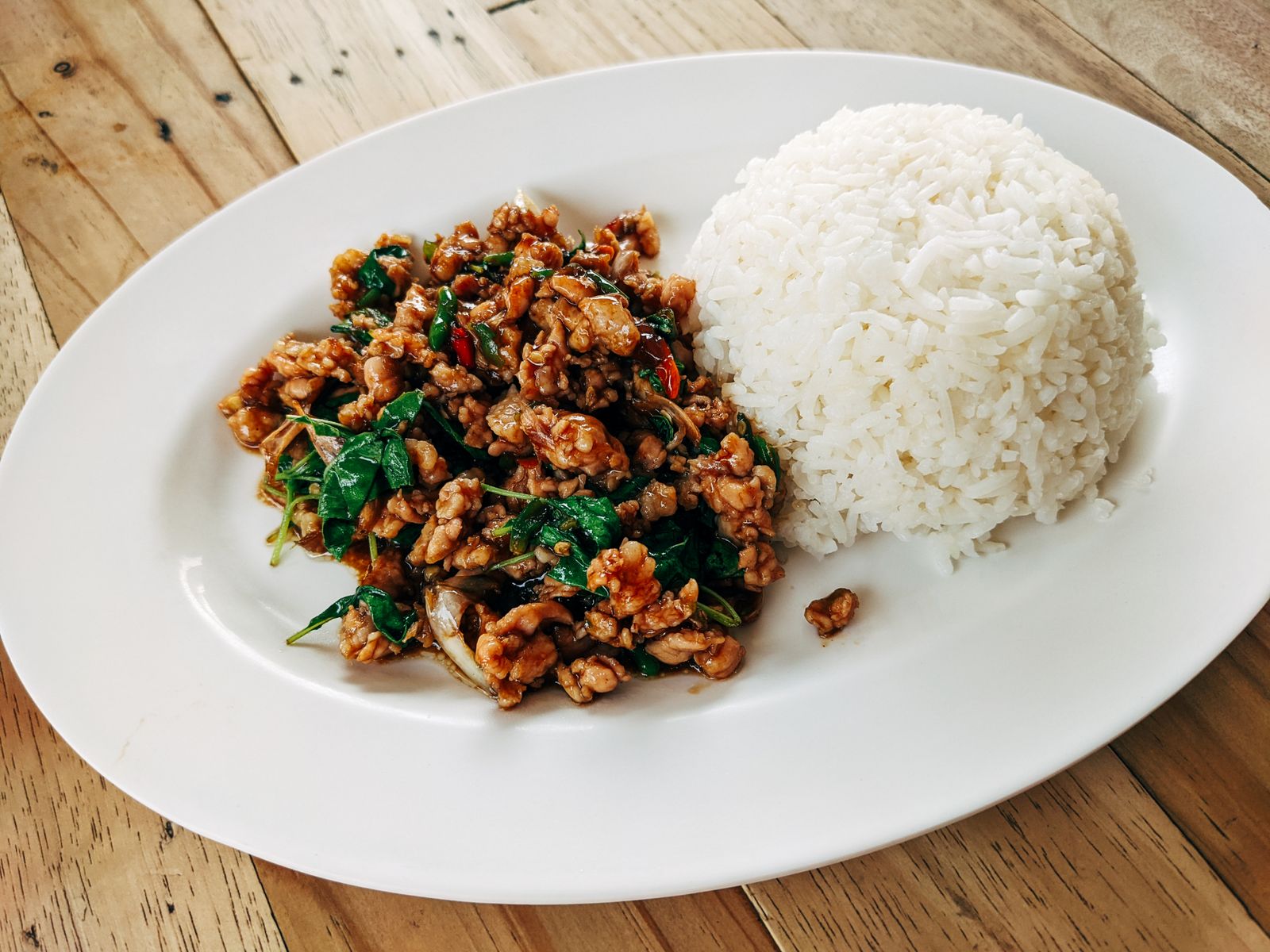
Get the pan hotter than feels right, cook no more than two portions at a time, and have the sauce mixed before anything touches the oil. The whole cook is under three minutes.
Crack the cream, fry the paste
Reduce thick coconut cream until the oil separates, fry the paste in that oil until it smells toasted, then add the rest of the liquid. Simmering paste in liquid gives a flat, raw curry.
Mortar before blender
Pounding bruises aromatics and releases oils that chopping and blending do not. Hardest ingredients go in first: galangal, lemongrass, then garlic, shallot and chili.
Aromatics you do not eat
Lemongrass, galangal and lime leaf go into soups whole, flavor the broth and get pushed to the side of the bowl. Fresh lime goes in off the heat so it stays bright.
Rice is the meal
In Thai, "to eat" is literally "to eat rice." Everything else on the table is kap khao, "with rice." Jasmine rice: rinse until the water runs almost clear, use slightly less water than the bag says, rest it covered for 10 minutes off the heat. Sticky rice: soak at least 4 hours, steam for 20 to 25 minutes, never boil. See the pantry guide for both.
Building a Thai meal
Dishes are served together and shared, not in courses. A good home spread has one curry or soup, one stir-fry, one salad or relish with raw vegetables, and rice. Vary the textures and heat: if the curry is rich, make the salad sharp; if the stir-fry is very spicy, keep the soup mild. For two people, one dish plus rice and prik nam pla on the side is a complete Thai dinner.